THREE:Indeed, Mr. O'Connell's agitating tour in the North of England and in Scotland was in effect a crusade against the Lords. In a speech which he addressed to an immense assemblage of the working classes of Manchester, he said, if there were only one House of Parliament, a majority of that House, perhaps a faction, might become the rulers of the entire nation. He was, therefore, for two Houses, but they should be honest and competent. Why should a man be a legislator because his father was one? It was as reasonable to expect that a man would be a good tailor on the hereditary principle. The Lords had proved themselves to be arrant botchers in the work of[393] legislation. Were they to have 170 masters of that class? He then proceeded in this strain:¡ª"Will you endure that any gang or banditti, I care not by what name you call them, should treat you contemptuously? In one word, I call them rogues. We must put down the House of Lords. Ye are miserable minions of power. Ye have no choice for yourselves till that House be thoroughly reformed. Let the king retain his prerogative of raising men to that rank and station to which they may be eligible. Let every 200,000 men in Great Britain and Ireland select one lord from this list; that will give you 120 for the 24,000,000; let them be re-eligible every five years, and you will have a steady Chamber." Still, the outrageous attacks of Mr. O'Connell gave much offence, and when, on his return to Dublin after his crusade, he was invited to dinner by the Lord-Lieutenant, a violent storm was raised against the Government, and the king was greatly indignant.
FORE:Soon after the prorogation of Parliament in the autumn her Majesty resolved to pay her first visit to her Irish subjects. At Cowes a royal squadron was in readiness to convoy the Victoria and Albert across the Channel. The Queen was accompanied by Prince Albert, the Prince of Wales, Prince Alfred, the Princess Royal, and the Princess Alice. The royal yacht anchored alongside the Ganges, her arrival off the Irish coast being announced by the booming of artillery on the 2nd of August, which was the signal for the lighting of bonfires upon the hills around the picturesque town of Cove. In the morning a deputation went on board, consisting of the Marquis of Thomond, head of the house of O'Brien, the Earl of Bandon and several of the nobility and gentry of the county, with the Mayor of Cork, and Mr. Fagan, M.P. for that city. They were introduced to her Majesty by Sir George Grey, the Secretary of State in attendance during the visit. Arrangements were then made for the landing, and about three o'clock the Queen first set foot upon Irish[572] ground, amidst the most enthusiastic demonstrations of loyalty from the multitudes assembled to bid their Sovereign welcome, mingling their cheers with the roar of cannon, which reverberated from the hills around. A pavilion had been erected for her Majesty's reception, and over it floated a banner, with the word "Cove" emblazoned upon it. The Queen had consented, at the request of the inhabitants, to change the name of the place and call it "Queenstown," and when she left the pavilion the first flag was pulled down and another erected in its stead, with the new name. Thus the old name of "Cove" was extinguished by the Queen's visit, just as the old name of "Dunleary" had been extinguished by the visit of George IV.
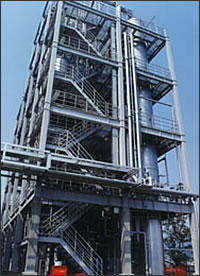
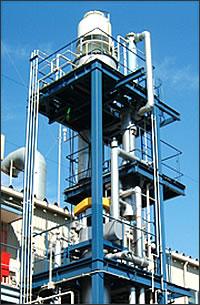
Methanol refinement systems, amyl alcohol refinement systems, ethanol refinement systems, hexanol distillation systems, propanol refinement systems, cyclohexanol distillation systems, isopropanol dehydration systems, ethylene glycol recovery systems, and butanol distillation systems.
FORE:
Hexane distillation systems, tall oil distillation systems, benzene distillation systems, lubricating oil refinement systems, xylene-free distillation systems, low-boiling gas distillation systems, ethylbenzene recovery systems, fusel oil distillation systems, naphthalene distillation systems, propylene recovery systems, and turpentine oil distillation systems.
FORE:MR. ALEXANDER'S LEVES IN KING'S BENCH PRISON. (See p. 310.)
Ether distillation systems, camphor distillation systems, epichlorohydrin distillation systems, aniline distillation systems, dioxane refinement systems, acetonitrile distillation systems, furfural refinement systems, formalin distillation systems, cyclohexane distillation systems, monoethanolamine rectification systems, polyglycol ether distillation systems, dimethylformamide recovery systems, acrylic glycol ether distillation systems, acrylonitrile refinement systems, acetone recovery systems, pyridine distillation systems, methyl ethyl ketone recovery systems, picoline distillation systems, methyl isobutyl ketone recovery systems, and acetaldehyde recovery systems.